
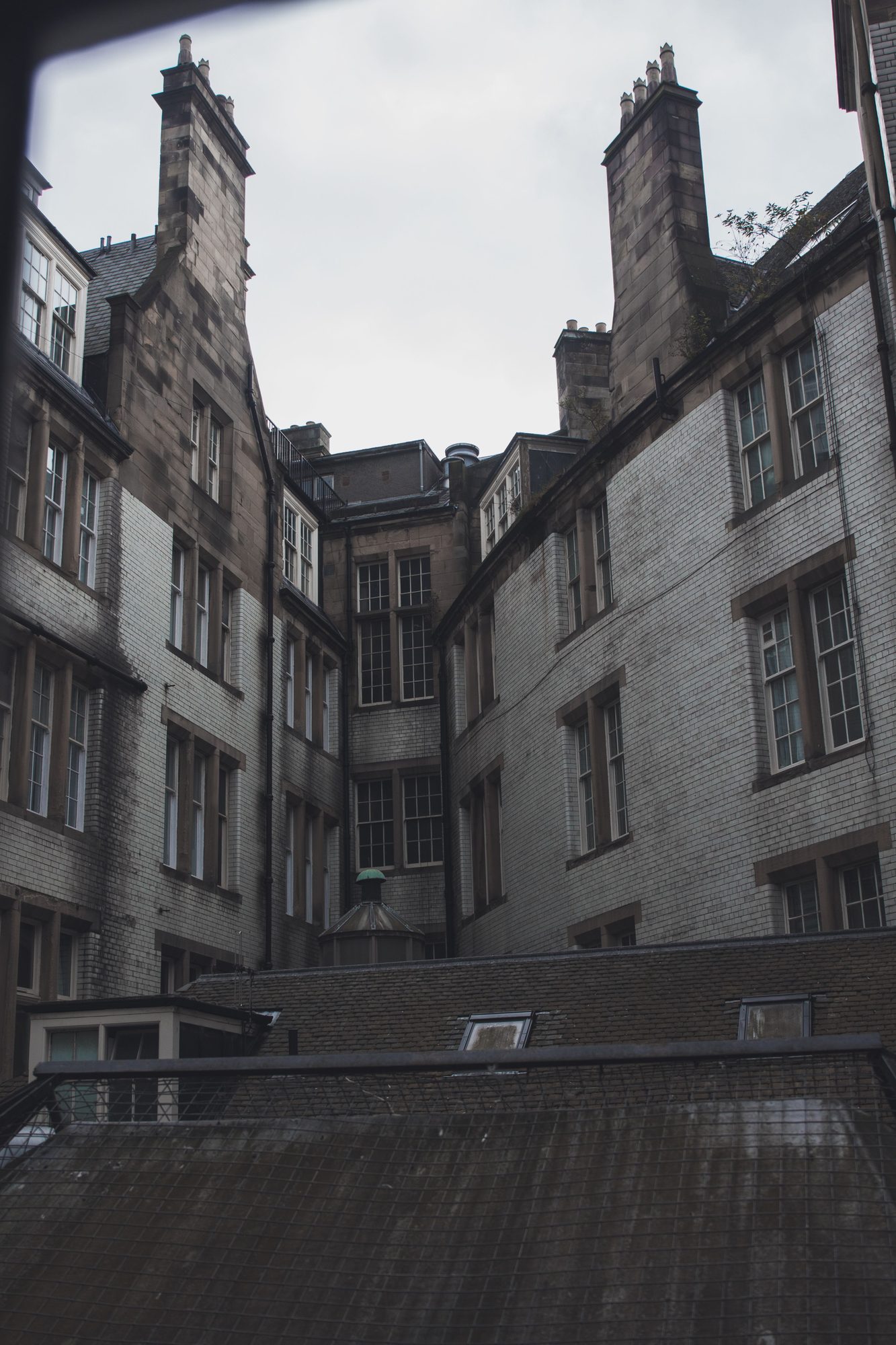
What is the most common problem with an old chimney stack?
On a traditional Scottish chimney, the usual problems are washed out mortar joints, loose chimney pots whose mortar bedding (the haunching or flaunching) has eroded, and stonework decayed by weather and flue gases. Historic Environment Scotland warns that washed out joints let water in and lead to a progressive loss of structural stability, so a neglected stack can go from a damp patch to a safety problem.1
Common faults and what they mean
- Loose or cracked pots. When the mortar holding a pot washes out, the pot becomes loose and needs re-bedding in fresh mortar. Unused flues can be fitted with ventilated covers with bird netting rather than being sealed.1
- Washed out joints. Eroded pointing lets water into the core of the stack. Historic Environment Scotland says repointing, and sometimes re-rendering, is needed, along with a check of the cope stone on top.1
- Decayed stone and plant growth. Flue gases speed up stone decay. A plant or small tree growing from a stack suggests roots are well into a loose core, and it should be removed.1
- Water through the flue. Water getting in through a poorly maintained chimney is often the underlying cause of flue problems inside the building.1
- Failed flashings. Where the stack meets the slates, lead flashings keep water out. Our lead flashing guide covers these.
How should a traditional chimney be repaired?
Historic Environment Scotland’s guidance on domestic chimneys says a stack can be expected to need rebuilding roughly every hundred years, that replacement material should match the original in colour, texture and compressive strength, and that a new cope should be in stone with a proper drip detail so water is thrown clear.1 Its advisory standards for historic buildings add that missing or defective pots should be replaced to match the original, that the number of pots should reflect the number of flues, and that disused flues should be vented top and bottom rather than blocked.2
Ventilation matters even when a fireplace is not used. Historic Environment Scotland advises that flues should not be closed off permanently, because the air moving up a chimney helps keep the building dry.1
Do you need permission to repair or rebuild a chimney?
Listed buildings. City of Edinburgh Council’s guidance for householders says removing all or part of a chimney on a listed building needs listed building consent, that original chimneys should be retained and repaired using traditional methods, and that pots should be replaced to match the original. Where original stone chimneys were replaced in brick and render, rebuilding in stone is encouraged.3 Carrying out works affecting a listed building’s character without consent is controlled under the Planning (Listed Buildings and Conservation Areas) (Scotland) Act 1997.4 Our planning and listed building guide explains the process.
Building warrants. Under the Building (Scotland) Regulations 2004, some replacement work does not need a building warrant, such as replacing a covering or rendering with material of the same general type to a standard no worse than before. Work associated with a chimney or flue connected to a heating appliance is treated differently and may need a warrant. Even where no warrant is needed, the work must still meet the building regulations.5 If in doubt, City of Edinburgh Council Building Standards can confirm what applies to a particular job.6
Who pays for a shared chimney stack in a tenement?
Check the title deeds first. Where the titles are silent, the Tenements (Scotland) Act 2004 makes a chimney stack that serves two or more flats the common property of the flats it serves, with each flat’s share worked out by the number of its flues in the stack compared with the total.7 Chimney stacks are expressly left out of the Tenement Management Scheme rule that treats the roof and external walls as shared regardless of ownership, so the flue-based shares matter when the bill is split.8 Our tenement shared repairs guide explains how owners reach decisions.
What if a chimney looks dangerous?
A stack that is leaning, has lost stones or has a loose pot over a pavement should be treated as urgent. Under section 29 of the Building (Scotland) Act 2003, the council can require or carry out urgent work on a dangerous building and recover the cost from the owners.9 Any owner in a tenement can also instruct emergency work to shared parts without waiting for a vote where it is needed in the interests of health or safety.8
Repair or rebuild: what we take on
Re-bedding a loose pot or making good the slates and flashing around the base of a stack are the kind of small jobs we specialise in. A full rebuild needs scaffolding and a stonemason, and is usually a bigger project. Our roof access guide explains why access decides so much of the cost.
Worried about a chimney?
Email us photos of the roof and what floor it’s on, or how many levels up it is, and we’ll tell you what we need to give you a price.
How to contact usSources
- Historic Scotland, Inform Guide: Domestic Chimneys and Flues (2013). engineshed.scot
- Historic Environment Scotland, Advisory Standards of Conservation and Repair for the Historic Building Environment in Scotland, s 4.9. historicenvironment.scot
- City of Edinburgh Council, Listed Buildings and Conservation Areas: Guidance for Householders, ‘Chimneys’. edinburgh.gov.uk
- Planning (Listed Buildings and Conservation Areas) (Scotland) Act 1997, ss 6 to 8. legislation.gov.uk
- Scottish Government, Building Standards Technical Handbook 2022: Domestic, s 0.5 (Building (Scotland) Regulations 2004, reg 5 and sch 3). gov.scot
- City of Edinburgh Council, ‘Building Standards frequently asked questions’. edinburgh.gov.uk
- Tenements (Scotland) Act 2004, s 3(4) and (5). legislation.gov.uk
- Tenements (Scotland) Act 2004, sch 1 (Tenement Management Scheme), rr 1.2, 1.3 and 7. legislation.gov.uk
- Building (Scotland) Act 2003, s 29. legislation.gov.uk