
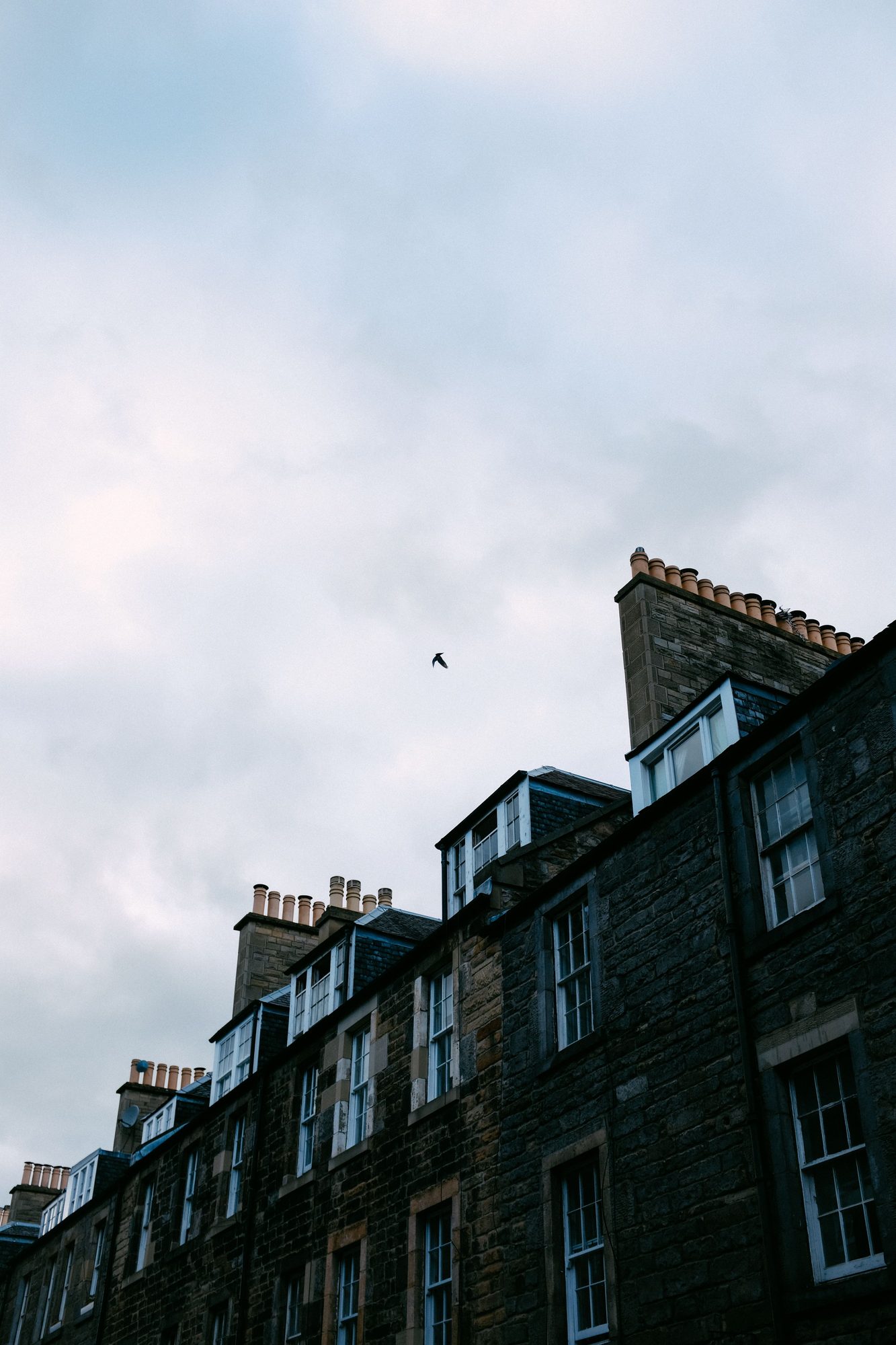
Slate roof terminology explained
Understanding a few key terms makes it much easier to describe a slate roof problem accurately, whether you are talking to us, a surveyor, or a factor. This reference covers the parts of a slate roof most relevant to a small repair: coursing, fixings, and the main junctions where problems tend to occur.
The parts of a slate roof
- Course. A single horizontal row of slates running across the roof.
- Headlap. The amount by which a slate overlaps the course two rows below it, the main mechanism by which a slate roof sheds water.
- Sarking. The timber boarding fixed across the roof rafters, onto which the slates (and any underlay) are fixed. Covered fully in our sarking and ventilation guide.
- Ridge. The horizontal apex where two roof slopes meet, usually capped with ridge tiles or a lead roll.
- Hip. A sloping external junction where two roof slopes meet at an angle, common on dormers and bay roofs.
- Valley. A sloping internal junction where two roof slopes meet, a common spot for water concentration and wear.
- Verge. The edge of a roof at a gable, where the slate oversails the wallhead.
- Flashing. Lead or other metal detailing used to weatherproof junctions between the slate and a wall, chimney, or dormer cheek. Covered fully in our lead flashing guide.
How slates are fixed
Traditional Scottish slates are fixed either by nailing through two pre formed holes near the head of the slate, or by hanging on a wooden peg over a batten. Nail fixing is far more common on Edinburgh’s tenement and townhouse roofs. Over time, fixing nails corrode, a process sometimes called nail sickness, which is one of the most common reasons an otherwise sound slate slips out of place. This is discussed further in our slate lifespan guide.
Slate size names
Historically, Scottish slate was sorted and sold under traditional size names, a system that reflected the way slate was quarried and graded rather than a standardised metric size. This is one reason matching a repair slate to an existing roof is a skilled task rather than a simple case of buying "a slate": the size, thickness, and colour all need to correspond to the course being repaired, as explained in our slate costs and coverage guide.
Email us photos of the roof and what floor it’s on, or how many levels up it is, and we’ll tell you what we need to give you a price.
Trying to describe a roof problem accurately?
Email us photos of the roof and what floor it’s on, or how many levels up it is, and we’ll tell you what we need to give you a price.
Email us about your roof