How is slate measured and laid on a roof?
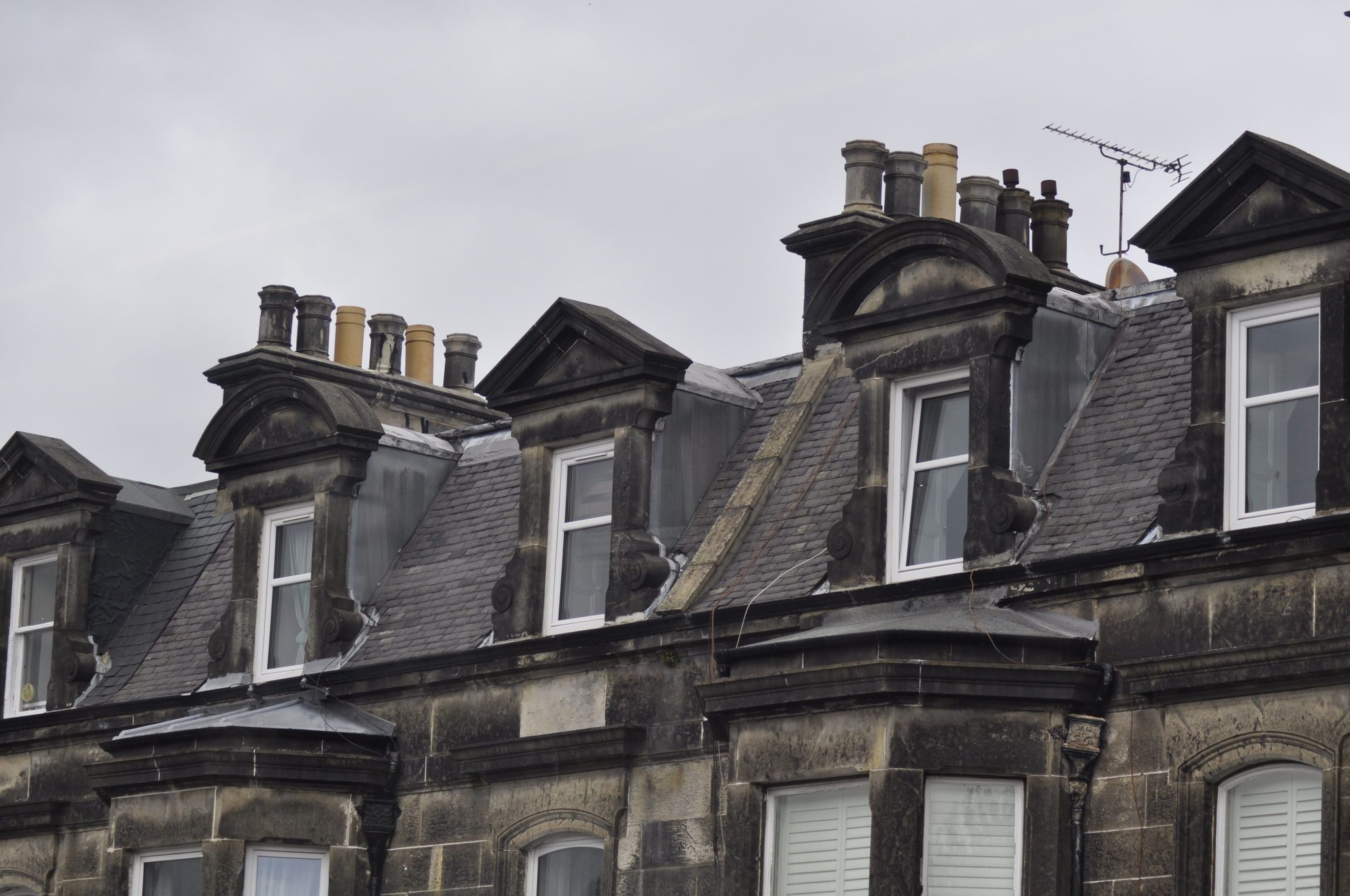
Slate is sold and specified by size, thickness, and quality grade rather than by area alone, and traditional Scottish roofs were laid using diminishing courses, larger slates near the eaves and progressively smaller slates toward the ridge. Understanding that pattern matters for a repair, because a replacement slate has to fit correctly within its course, not just be roughly the right size.
This is a technical guide, not a price list. We do not publish per slate or per square metre prices, because sourcing, matching, and access costs vary too much between properties to make a generic figure meaningful. Our cost guide explains why we always price from photographs of the actual roof.
Diminishing courses
On a traditionally laid Scottish slate roof, each course of slate running horizontally across the roof is slightly smaller than the one below it, so the roof appears to taper in slate size from eaves to ridge. This was originally a practical response to the way Scottish slate was quarried and sorted by size, and it remains a defining visual feature of traditional Scottish roofs. A repair slate has to be sized correctly for its course, not simply be a slate of roughly the right shape.
How coverage works
Slate roofs rely on overlap, each slate overlapping the one two courses below it, known as the headlap, so that water is always shed over at least two layers of slate before it can reach the roof structure. That overlap is why a single slipped slate does not necessarily cause an immediate leak (see our guide to whether a slipped slate will leak), but it also means a slate sitting even slightly out of position can compromise the coverage for the slates around it.
Quality and grading
Slate quality varies by source and by individual piece, and Historic Environment Scotland’s guidance on repairing Scottish slate roofs sets out the characteristics of good quality slate and common signs of deterioration in detail. Matching a repair slate to the existing roof, in size, thickness, and quality, is part of doing a small repair properly.
Email us photos of the roof and what floor it’s on, or how many levels up it is, and we’ll tell you what we need to give you a price.
Need a slate matched to your existing roof?
Email us photos of the roof and what floor it’s on, or how many levels up it is, and we’ll tell you what we need to give you a price.
Email us about your roof